
Safe, Supported, Connected: The Impact of Our CPC Programs
How do local community policing centres’ programs impact their communities?
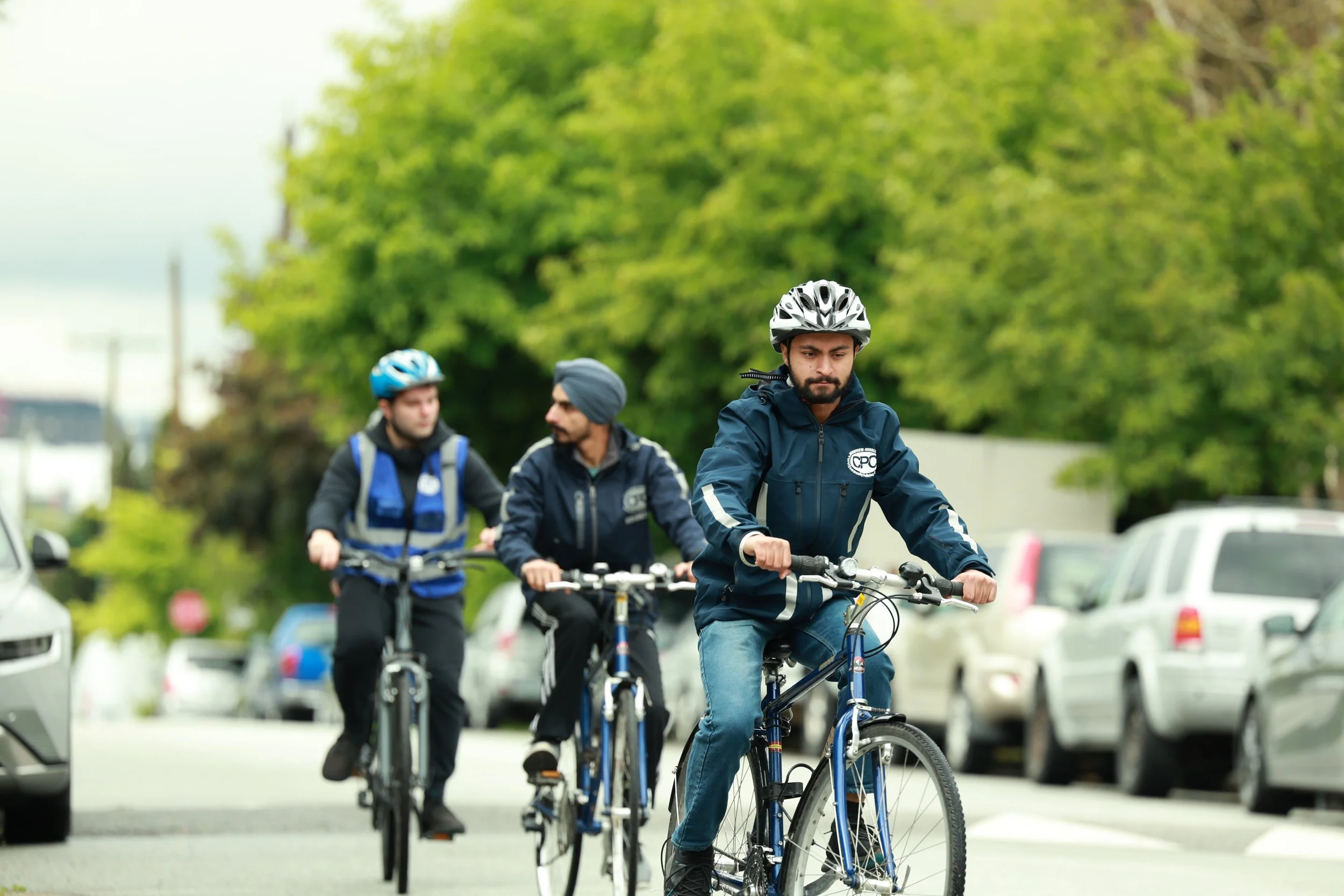
Mount Pleasant Community Policing Centre volunteers out on a Neighbourhood Safety Patrol
This article explores the programs and benefits of the Mount Pleasant Community Policing Centre (CPC). From Neighbourhood Safety Patrols and Road Safety initiatives to Community Outreach, Information & Referral Services, and Community Clean-Ups, these programs aim to enhance public safety, foster trust, and strengthen community connections. Research shows that police/community partnerships improve residents’ perception of safety, increase trust in law enforcement, and encourage cooperation in addressing local issues (Reisig & Parks, 2004; Peyton, Sierra-Arévalo, & Rand, 2019). Through volunteer engagement and proactive initiatives, CPC programs contribute to safer, more connected, and resilient neighborhoods.
Neighbourhood Safety Patrols
The Neighbourhood Safety Patrol program at the Mount Pleasant Community Policing Centre involves trained volunteers walking through the neighbourhood to help increase safety, and provide a visible community presence. Volunteers do not enforce laws, but focus on being approachable and supportive to community members. During patrols, volunteers check on individuals who may need assistance, distribute items such as water, snacks, socks, and hand warmers during colder weather, and carry naloxone kits to respond to potential overdose situations. They also observe and report safety concerns and interact with local businesses and residents.
Road Safety
The Road Safety program focuses on improving awareness about traffic safety for drivers, cyclists, and pedestrians. Volunteers and cpc staff help educate the public about safe road behaviour, and encourage people to follow traffic rules. This program may involve awareness campaigns, community engagement activities, and reminders about safe driving and pedestrian practices. The benefit of this program is that it helps reduce accidents, improves road awareness, and encourages safer transportation habits within the community.
Community Outreach
The Community Outreach program aims to build strong relationships between the CPC, and the people living and working in the neighbourhood. Volunteers engage with residents, businesses, and vulnerable individuals to understand community concerns, and provide support when possible. Outreach activities include sharing information about available services, and encouraging people to participate in community safety initiatives.
Information and Referral Services
The Information and Referral Services program helps connect individuals with appropriate resources and support services available in the community. Volunteers provide information about organizations that offer assistance for issues such as housing, health services, addiction support, and mental health resources. By guiding people to the right services, CPC helps ensure that individuals receive the help they need.
Community Clean-Ups
The Community Clean-Up program encourages volunteers and residents to work together to maintain clean and safe public spaces. Participants collect garbage, remove hazardous waste, and help improve the appearance of streets and neighbourhood areas. These activities not only help protect the environment but also encourage community members to take pride in their surroundings.
Benefits of the programs:
Neighbourhood Safety Patrols
Increases safety through visible volunteer presence in public spaces
Helps discourage unsafe or suspicious activities
Promotes harm reduction by carrying naloxone kits
Provides basic support items such as water, snacks, socks, and hand warmers
Builds trust between residents, businesses, and volunteers
Strengthens community relationships and sense of belonging
Road Safety
Promotes awareness of safe driving, cycling, and pedestrian behaviour
Helps reduce the risk of road accidents
Encourages people to follow traffic rules more carefully
Improves public understanding of road safety issues
Contributes to safer streets for drivers, cyclists, and pedestrians
Community Outreach
Strengthens communication between community members and the Mount Pleasant Community Policing Centre
Helps identify community concerns and safety issues
Provides support and information to residents and vulnerable individuals
Encourages greater community participation
Builds trust and connection within the neighbourhood
Community Clean-Ups
Improves cleanliness and safety of public spaces
Removes garbage and hazardous waste
Creates a healthier neighbourhood environment
Encourages community members to take pride in their surroundings
Promotes cooperation and community spirit among residents and volunteers
Information and Referral Services
Helps individuals access community resources and support services
Provides guidance for services such as housing, health care, and mental health support
Connects people with appropriate organizations
Improves access to help for those who need it
Supports overall well-being and quality of life
Research on the Benefits of Community Policing
Several studies highlight the benefits of community policing programs, particularly in improving public safety, trust, and cooperation between police and community members. The following research findings support the importance of community-based safety initiatives such as those implemented by the Mount Pleasant Community Policing Centre.
In their 2004 research, Michael D. Reisig and Roger B. Parks studied how community policing programs, where police and citizens work together, can improve safety and quality of life in neighborhoods. They found that when the police and community cooperate, people notice crime, disorder, and drug problems more than in neighborhoods without strong police-community teamwork. Community members also feel safer when they see these partnerships in action. The study showed that strong relationships between police and residents lead to greater trust, better communication, and more effective solutions to local problems. Overall, community policing helps create stronger bonds in the community and makes people feel safer and more connected (Reisig & Parks, 2004).
Research by Kyle Peyton, Michael Sierra-Arévalo, and David Rand shows that community policing can make people feel more positive about the police. Their study found that even one friendly interaction, called a “non-enforcement interaction” (when police talk to people without giving tickets, making arrests, or enforcing rules), can increase trust, fairness, and willingness to cooperate with officers. These effects can last for up to 21 days and are especially strong for people who had a negative opinion of the police before. This research shows that building positive relationships between police and community members, even in small ways, improves safety, trust, and cooperation in neighborhoods (Peyton, Sierra-Arévalo, & Rand, 2019).
Overall, community policing programs through patrols, outreach, education, and support create safer, stronger, and more connected neighborhoods. By fostering trust, encouraging cooperation, and addressing local concerns, these programs benefit both residents and the police, showing that collaboration is key to a healthy, thriving community.
References:
Peyton, K., Sierra‑Arévalo, M., & Rand, D. (2019). A field experiment on community policing and perceptions of legitimacy. Proceedings of the National Academy of Sciences, 116(30), 14804–14809. https://doi.org/10.1073/pnas.1910157116
Reisig, M. D., & Parks, R. B. (2004). Neighborhood context, policing, and the quality of life. Journal of Quantitative Criminology, 20(3), 201–225. https://doi.org/10.1080/07418820000094681